
07.04.2026
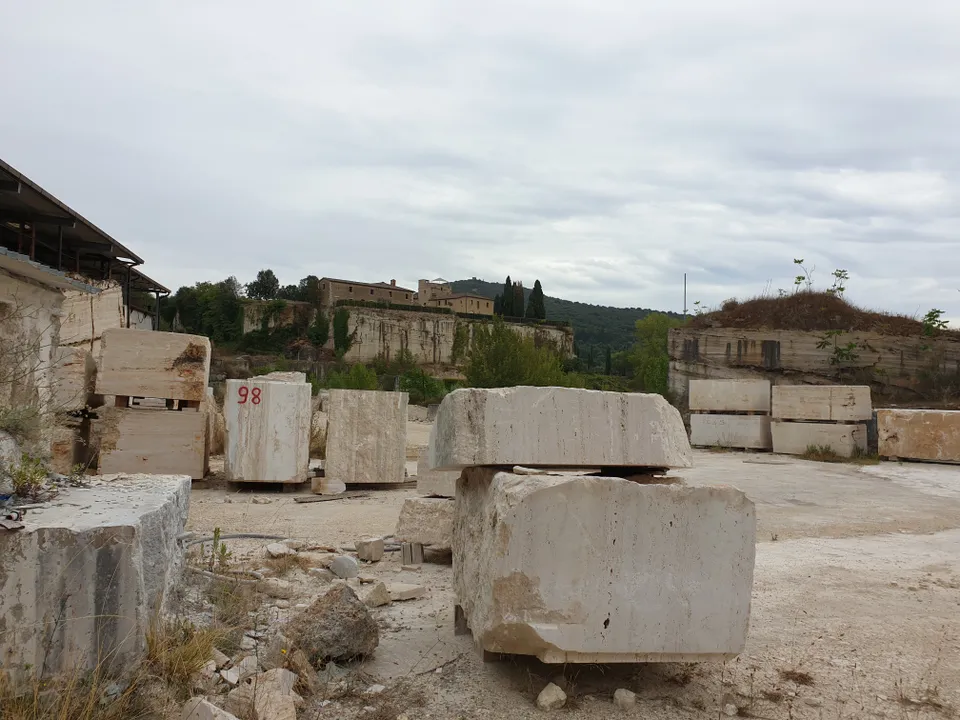
“Trani and Travertine – Only at Orlandini” – many of the “old hands” in the industry still remember our old slogan, which is now older than some of our employees. While Trani has meanwhile faded into obscurity, travertine has once again become one of the leading trend materials, especially in major metropolitan areas.
No matter how large or small your travertine project is, we are at your side with decades of experience working with this material, whether you need a few slabs or hundreds of square meters of finished work.
The World of Travertine: Not All Travertine Is the Same
Travertine is not just travertine. Even in the classic quarrying region around Tivoli near Rome, there are dozens of different varieties. The best known, which we regularly carry in our range, include:
Most varieties are quarried in the greater Tivoli-Guidonia area in the Province of Rome, one of the world's most important natural stone regions, with a history dating back to antiquity. The Colosseum sends its regards.
Insider Tips: Travertine Beyond Tivoli
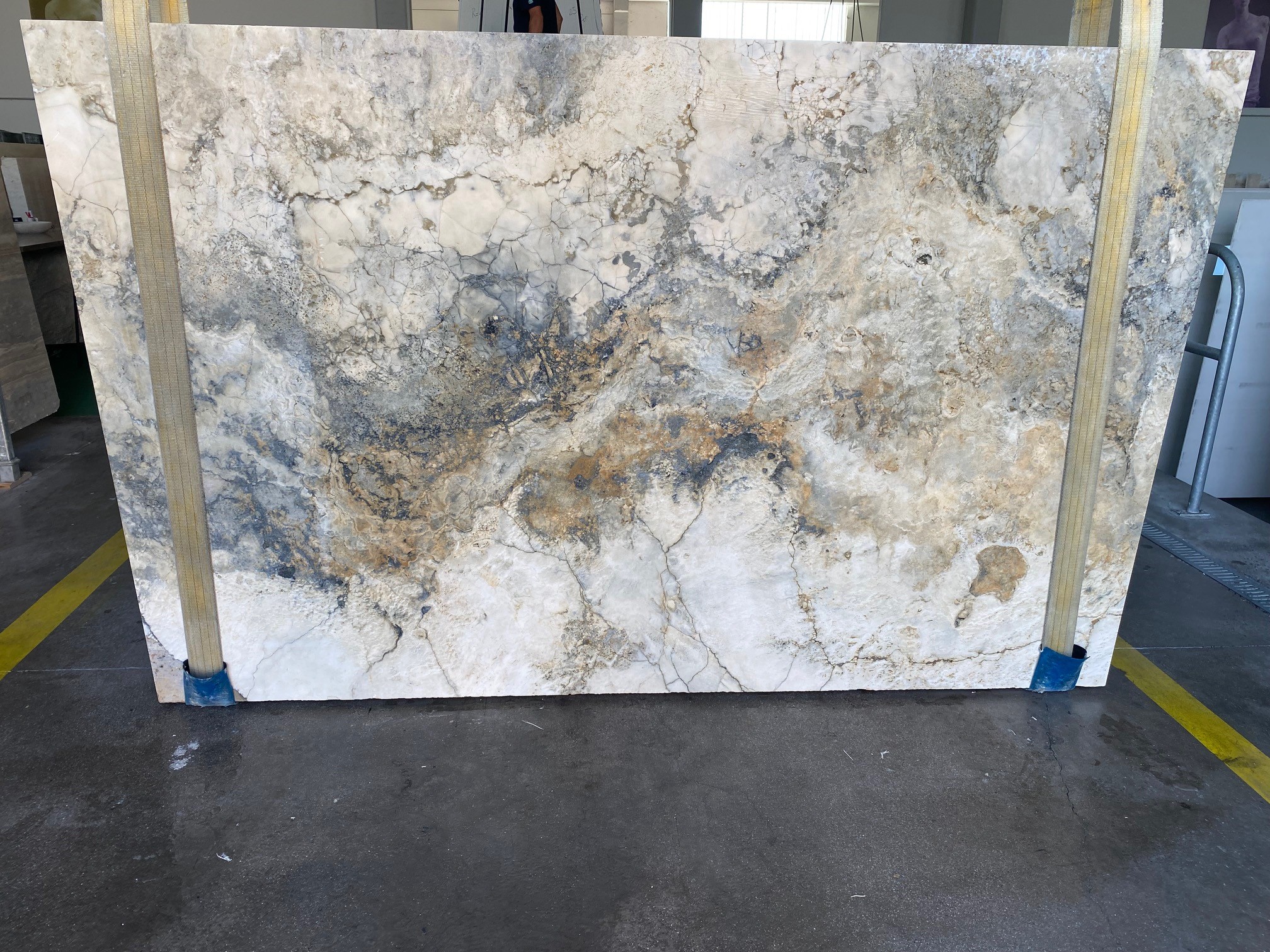
Tivoli is the most famous destination, but by no means the only one. Italy offers several lesser-known travertine deposits that are highly interesting for connoisseurs and distinctive projects:
Not all of these varieties are available at short notice at all times. Contact us if any of these materials spark your interest. We know where to look.
More Than Just Honed Finishes: From sandblasted surfaces to chiseled edges, we can have the finish customized in Italy to match your vision in the shortest possible time. We can also provide traditional Roman-pattern flooring with tumbled edges or raw blocks for your solid stone projects, all tailored specifically to your requirements.
Filled Travertine Is Not Always the Same
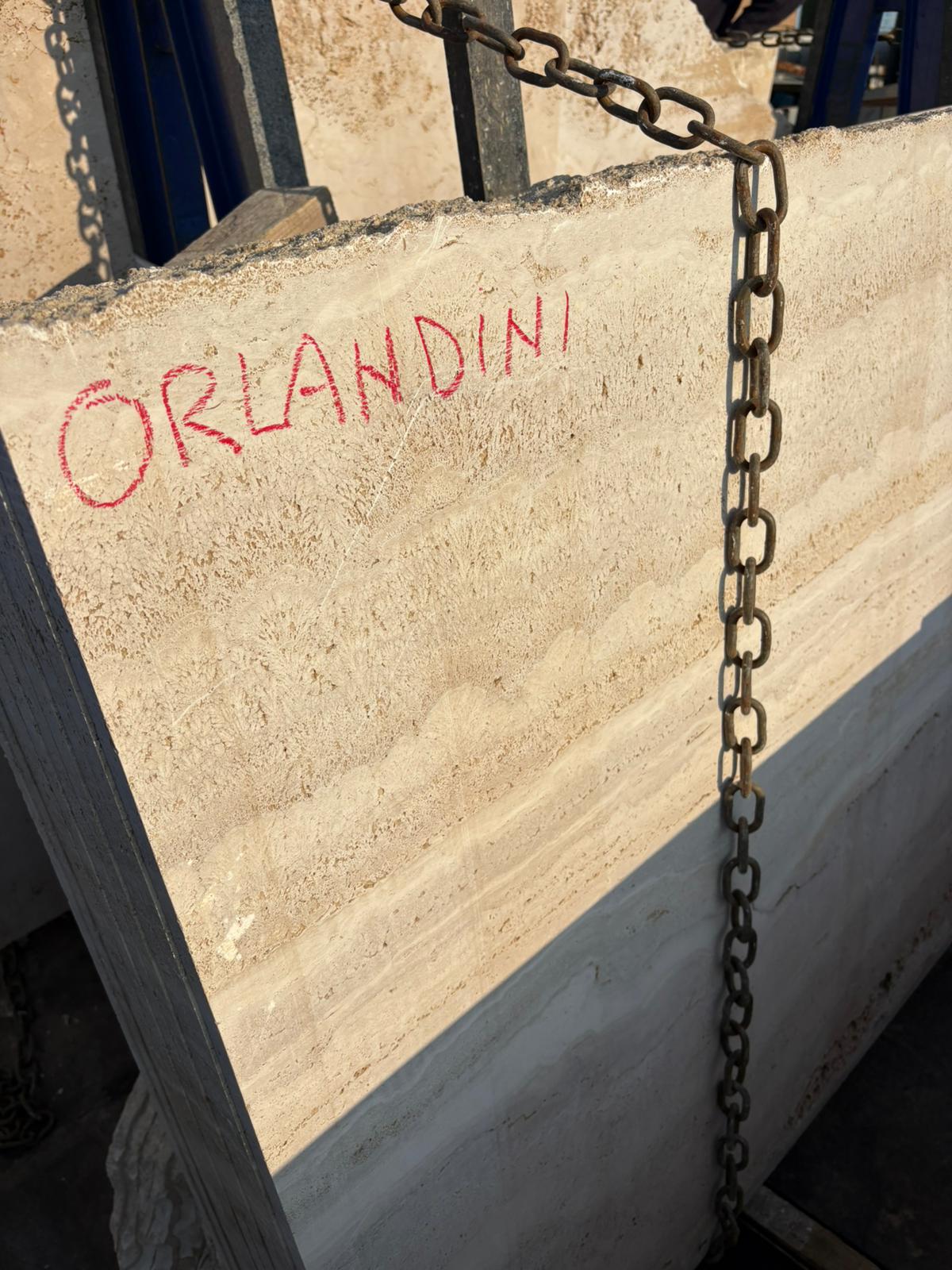
When it comes to filling travertine, we primarily encounter two methods in practice, each offering its own advantages:
Cement-Filled Travertine is the traditional method and remains widely used today, and for good reason. Cement filler is mineral-based, vapor-permeable, and technically highly compatible with limestone. Many installers particularly appreciate the durability and ease of reworking this method, especially in dry interior areas and on floors with underfloor heating. Minor repairs can be carried out easily at any time. Another advantage is that this type of filling tends to feel more “natural.”
Epoxy-Filled Travertine uses resin-based fillers made from epoxy or polyester. This method offers excellent adhesion and water resistance. A particular advantage is that the filler can either be transparent or colored. This makes it possible to choose a filler that creates a deliberate color contrast with the stone. It is often selected when exceptionally smooth surfaces or specific visual requirements are the primary focus.
Both methods have their rightful place. The choice depends on the intended application, installation conditions, and aesthetic goals. We would be happy to help you find the right option for your project.
Do you have questions about travertine, a specific variety, or an ongoing project? We look forward to hearing from you.
Kind regards, Your Orlandini Team

Would you like to be regularly informed? Then we would be happy to send you our latest news by email.
Sie möchten gerne regelmäßig informiert werden? Dann senden wir Ihnen gerne unsere Neuigkeiten per E-Mail.
©️ 2023 Ulisse Orlandini Naturstein GmbH

