
08.05.2026

Marble and limestone have long been regarded as some of the most elegant materials in interior design. At the same time, however, they continue to carry the reputation of being “too delicate for everyday use.” This is exactly where a new generation of surface treatments developed in Italy comes into play, significantly improving the properties of natural stone without altering its character.
This article explores whether marble is suitable for kitchen countertops, how its material properties can be assessed realistically, and why the traditional image of “sensitive natural stone” no longer tells the whole story.
The Traditional Concern: Marble Is Delicate
The skepticism surrounding marble in kitchens is not without reason. As a calcareous stone, it is sensitive to certain influences:
Untreated marble can absorb stains or react to acids with etching and dull spots. For this reason, it has traditionally been used more often in bathrooms, wall cladding, and representative spaces rather than as a heavily used work surface.
The Decisive Difference: Modern Surface Treatments from Italy
In recent years, however, technological advances have significantly expanded the potential applications of marble and limestone. A protective treatment developed in Italy permanently bonds with the stone's internal structure.
The key difference compared to traditional sealers:
Instead, the treatment penetrates the stone's pore structure and selectively enhances its performance characteristics without concealing its natural surface.
What Improvements Can Be Expected?
This type of treatment makes marble significantly more resistant in everyday use. For kitchen applications, the following benefits are particularly relevant:
Significantly Improved Stain Resistance
Substances such as:
are much less likely to penetrate the stone and can be removed more easily.
Improved Resistance to Acids
Common kitchen ingredients such as:
are far less likely to leave visible marks on the surface.
Natural Stone Remains Natural Stone
Despite the improved performance, the appearance remains unchanged:
What Should Still Be Considered?
Even with modern protective treatments, marble remains a natural material. This means:
The difference is that everyday use becomes much more forgiving, and many of the traditional limitations are significantly reduced.
Conclusion: Is Marble Suitable for Kitchen Countertops?
A simple “yes” or “no” does not do the subject justice. A more realistic assessment would be:
Marble is far more suitable for modern kitchens today than it was in the past, provided that it is professionally treated and matched appropriately to the intended use.
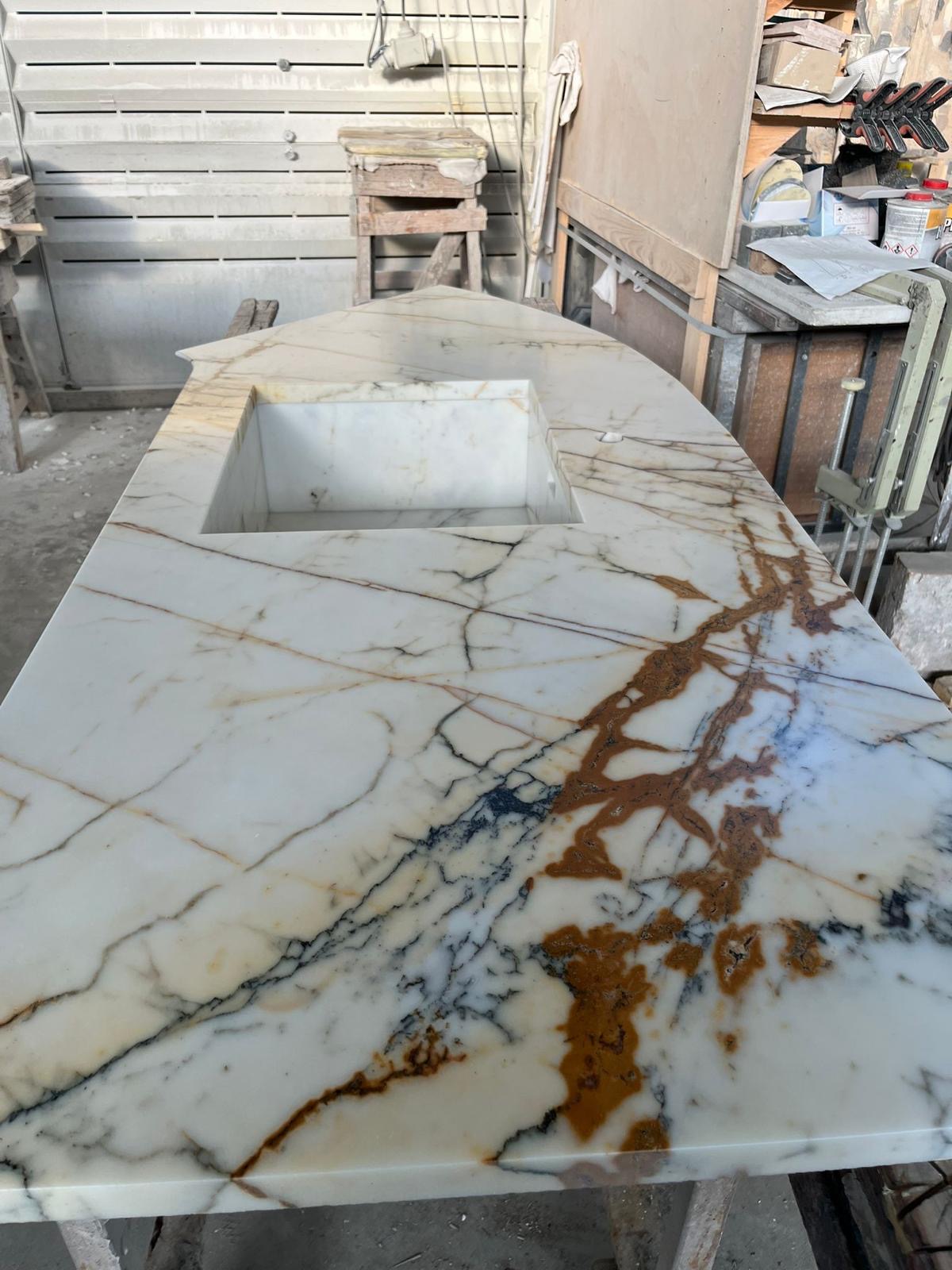
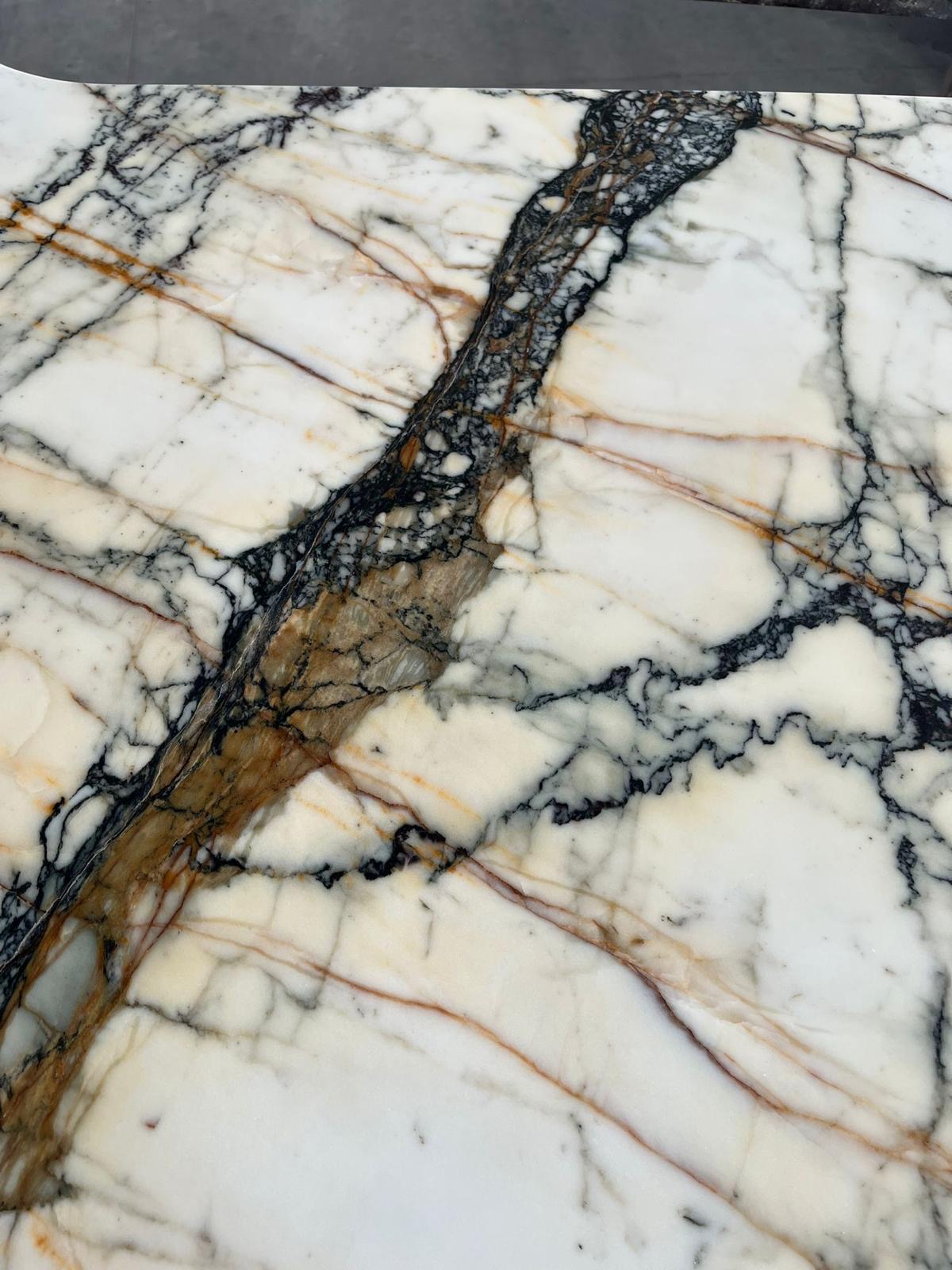
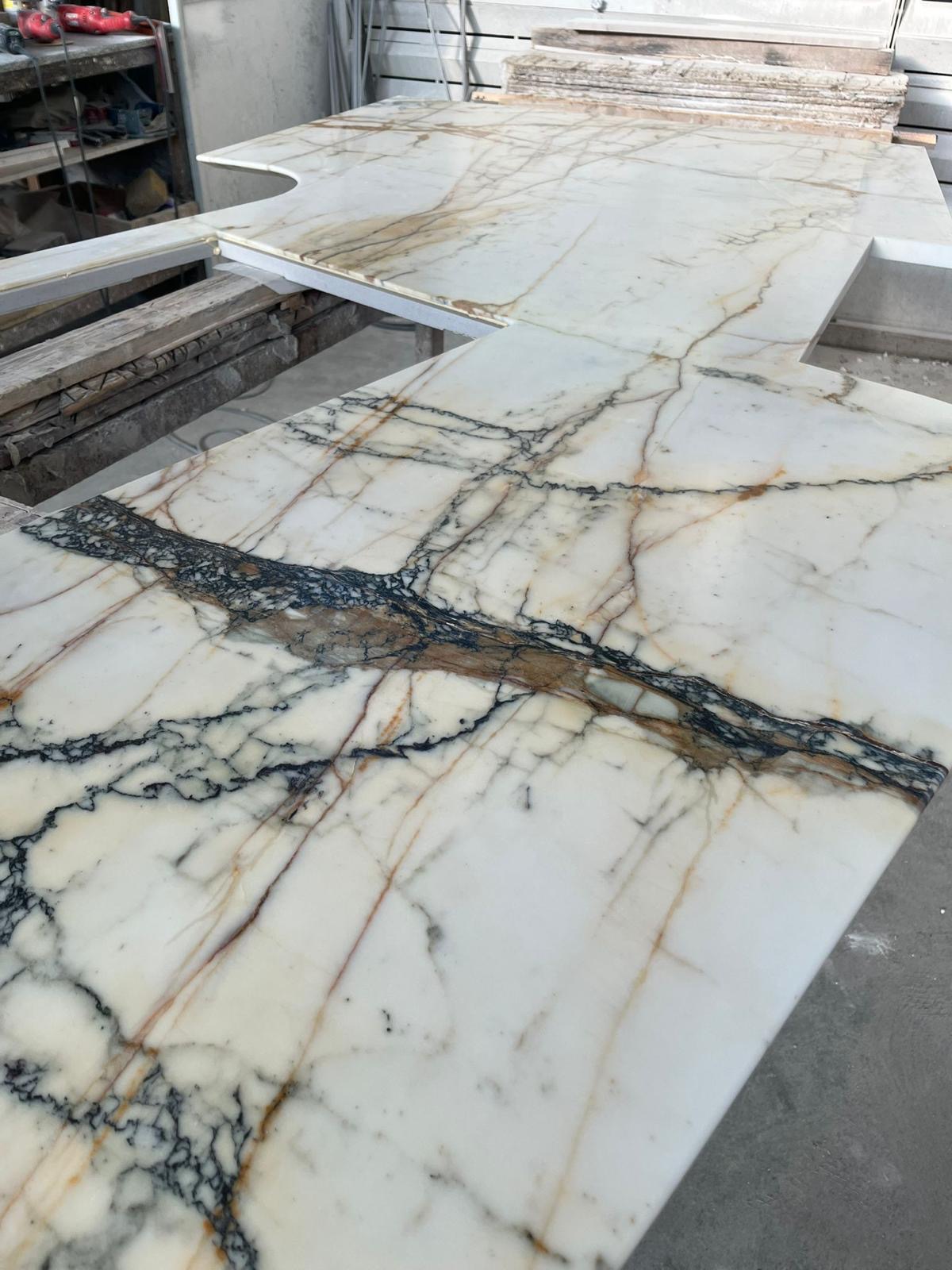
The golden rule is that success always depends on the collaboration between the homeowner and the stone fabricator. Anyone looking for a completely worry-free kitchen may be better served by a granite countertop. However, those who appreciate that a kitchen, much like its owner, ages naturally over time will be rewarded with an extraordinary selection of breathtaking materials, such as this Paonazzo marble kitchen that we had the pleasure of supply, shown here while still in the workshop:

Would you like to be regularly informed? Then we would be happy to send you our latest news by email.
Sie möchten gerne regelmäßig informiert werden? Dann senden wir Ihnen gerne unsere Neuigkeiten per E-Mail.
©️ 2023 Ulisse Orlandini Naturstein GmbH

